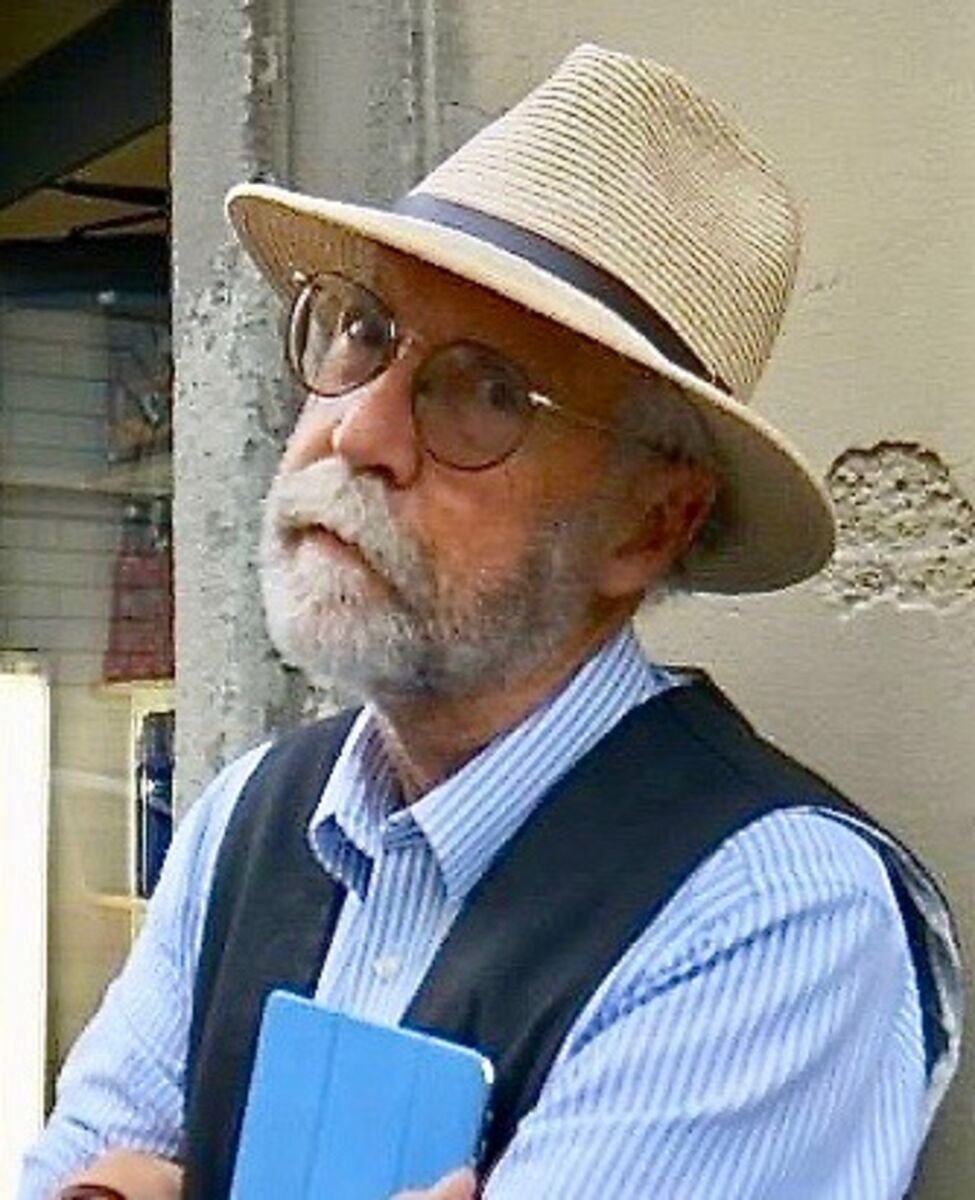
Don Eugene Seastrum
There is a quiet persistence running through Don Seastrum’s work, the kind that comes from a lifetime of looking closely and trusting that images can hold more than what first meets the eye. Based in Gunnison, Colorado, Seastrum has spent decades building a studio practice rooted in watercolor, acrylic painting, and hand-pulled stone lithography, but what sets his work apart is not simply his command of medium. It is the deeper sense that each piece is part of a long conversation about how we inhabit space, how memory shapes what we see, and how the human figure can carry emotional and conceptual weight without ever becoming literal.Seastrum’s background as an artist and educator gives his work a particular depth. Having taught, traveled, exhibited widely, and continued to make work from the studio perspective, he brings to his practice the patience of someone who has spent a great deal of time not only making art, but thinking about what art can do. That seriousness is evident in the way he constructs an image. He does not begin with a desire to describe a specific place or person. Instead, he begins with an idea, then chooses the forms, colors, spaces, and relationships that will allow that idea to take shape visually. The result is art that feels intentional and layered, but never closed. It invites the viewer in, then asks for a slower, more attentive kind of seeing.
What is especially striking about Seastrum’s work is the tension he creates between recognition and uncertainty. His figures are present, but not fixed. His landscapes suggest place, but not a place one could name. His compositions often feel as though they are suspended between states — between memory and immediacy, interior life and external world, structure and mystery. That in-between quality gives the work its emotional charge. It is not didactic, and it does not offer easy answers. Instead, it opens a space where feeling and thought can meet.This is part of what makes his paintings and prints so compelling in a human sense. They feel lived-in, not because they depict familiar scenes, but because they seem to arise from a person who has spent years asking serious questions about being, perception, and transformation. There is discipline in the work, but also vulnerability. There is clarity, but also unease. The images often carry a sense of contradiction — of being both constructed and fragile, both grounded and unsettled. That combination gives them a memorable presence.
Seastrum’s use of human imagery is especially effective because it avoids portraiture’s usual assumptions. The figures are not individuals in the biographical sense; rather, they function as presences that can suggest states of mind, emotional distance, or the shifting identity of the self. They appear transformed by the pictorial environment rather than simply placed within it. In this way, the figure becomes part of a larger inquiry into how we understand ourselves through image, space, and time.His landscapes work similarly. They are not straightforward depictions of the natural world, but instead internalized spaces — visual fields that hold atmosphere, memory, and emotional complexity. In Seastrum’s hands, landscape becomes less about geography than about consciousness. It is a place where the ordinary is subtly altered, where a horizon, a wall, or a passageway can become a site of reflection. That ability to transform the familiar into something slightly uncanny is one of the hallmarks of his practice.
There is also something deeply admirable in the consistency of his commitment. Seastrum’s work reflects the discipline of an artist who has remained devoted to the studio, to the slow accumulation of ideas, and to the belief that art can still make room for ambiguity in a world that often wants immediate clarity. His work does not demand attention through spectacle. It earns it through depth. The more time one spends with it, the more it reveals.
For viewers, that makes the experience of encountering his work feel personal in a particular way. One does not simply “read” a Don Seastrum painting; one enters into it. The image becomes a site of looking, wondering, and thinking. And because his work resists easy categorization, it lingers. It stays with the viewer not as a fixed statement, but as a question — one that continues to open outward long after the first glance.
In that sense, Seastrum’s art feels less like a set of objects than a sustained act of attention. It is the product of an artist who understands that images can carry thought, and that the most resonant work is often the work that leaves enough space for the viewer to bring something of themselves to it. That generosity — disciplined, searching, and quietly human — is what gives his work its lasting force.